Local points of care
Eleven self-operated Ping An health and testing facilities became the first physical nodes in a broader longevity medicine network.
A national platform for healthy longevity
On July 28, 2026, Ping An launched an expanded health and longevity management system built around medicine, artificial intelligence, and frontier science. Eleven physical centers and a 46-partner alliance give the initiative the scale to move proactive health from an idea into everyday service.
The shift
The decisive challenge of a longevity society is not simply adding years. It is reducing the years spent with chronic disease, disability, cognitive decline, and loss of independence.
Chinese coverage of the launch framed the problem as a health deficit of roughly a decade: average life expectancy approaching 79 years, but healthy life expectancy below 69. Ping An is responding by moving the system upstream, from episodic treatment and post-event reimbursement toward continuous risk detection, active intervention, and coordinated care.
This matters because scale changes what preventive medicine can accomplish. A national insurer and health platform can connect longitudinal data, clinical services, AI triage, physical centers, home support, and enterprise health programs. Each layer becomes more useful when it is part of a single closed loop.
What was announced
The launch combined physical infrastructure, digital delivery, clinical coordination, scientific standards, and an industry alliance.
Eleven self-operated Ping An health and testing facilities became the first physical nodes in a broader longevity medicine network.
Medical, pharmaceutical, diagnostic, wellness, and rehabilitation partners joined a high-standard, traceable service alliance.
AI supports rapid response, movement analysis, ongoing coaching, and detection of signals that merit deeper clinical review.
Services connect online access, hospitals, homes, and enterprises instead of forcing every need through a single clinical setting.
The 2026 High-Quality Healthy Longevity White Paper provides a centenarian health assessment framework for consistent delivery.
Four quality gates and four dedicated-service commitments are intended to make a complex ecosystem accountable.
Program reconstruction
The program is not one product. It is a coordinated architecture for early risk identification, emergency response, navigation, chronic disease management, active intervention, and long-term quality control.
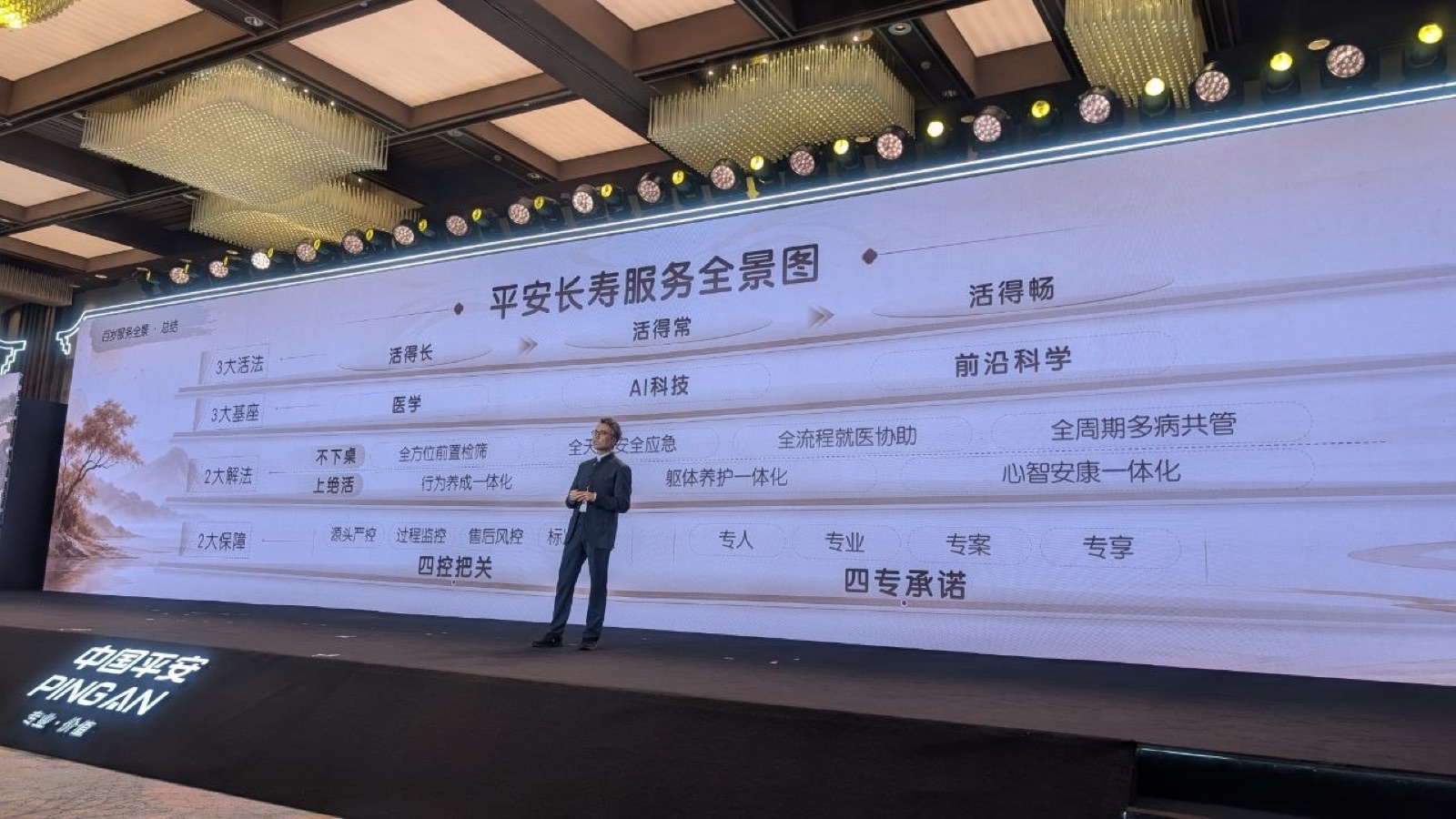
Across the original launch coverage, the same structure appears consistently. Ping An describes two core ideas: remain in control of the life course, then apply active interventions that preserve function. Three capabilities support this structure: medicine, AI, and frontier science.
Official unveiling ceremony for the Ping An Health Longevity Centers.
Four preventive defenses
The first half of the program is designed to identify, interpret, and manage risk before it becomes an avoidable crisis.
Front-load detection so risks can be recognized, screened, and acted upon earlier.
Provide continuous access and escalation when urgent health events occur.
Help members move through consultation, diagnosis, treatment, and follow-up.
Coordinate chronic conditions across the full life cycle rather than treating each in isolation.
Use AI to recognize patterns, respond rapidly, and direct people toward deeper diagnostics when needed.
Address fragmented histories by building traceable pathways from screening through rehabilitation.
Leadership perspective
Ping An is building a managed-care model with online, hospital, home, and enterprise channels across the full life cycle.
The system combines four risk defenses with behavior, physical, and cognitive or mental health interventions.
Detect disease early, treat it while options remain, and measure aging biology rigorously as new therapeutics enter trials.
The initiative aligns with China’s shift toward healthy aging, prevention, functional maintenance, and longer healthspan.
Three intervention layers
Ping An pairs risk control with active intervention across three domains that shape long-term function.
Delivery infrastructure
Digital access, rapid AI-supported response, telehealth, and continuous guidance.
Clinical diagnosis, treatment coordination, specialist access, and structured referral.
Support in the setting where adherence, recovery, safety, and daily function are determined.
Population-level prevention and health management delivered through the workplace.
Strict sourcing, standardized control, process monitoring, and post-service risk management.
A dedicated health manager, professional team, individualized case plan, and protected experience.
Self-operated centers establish the first nodes, with affiliated institutions expanding national coverage.
AI in practice
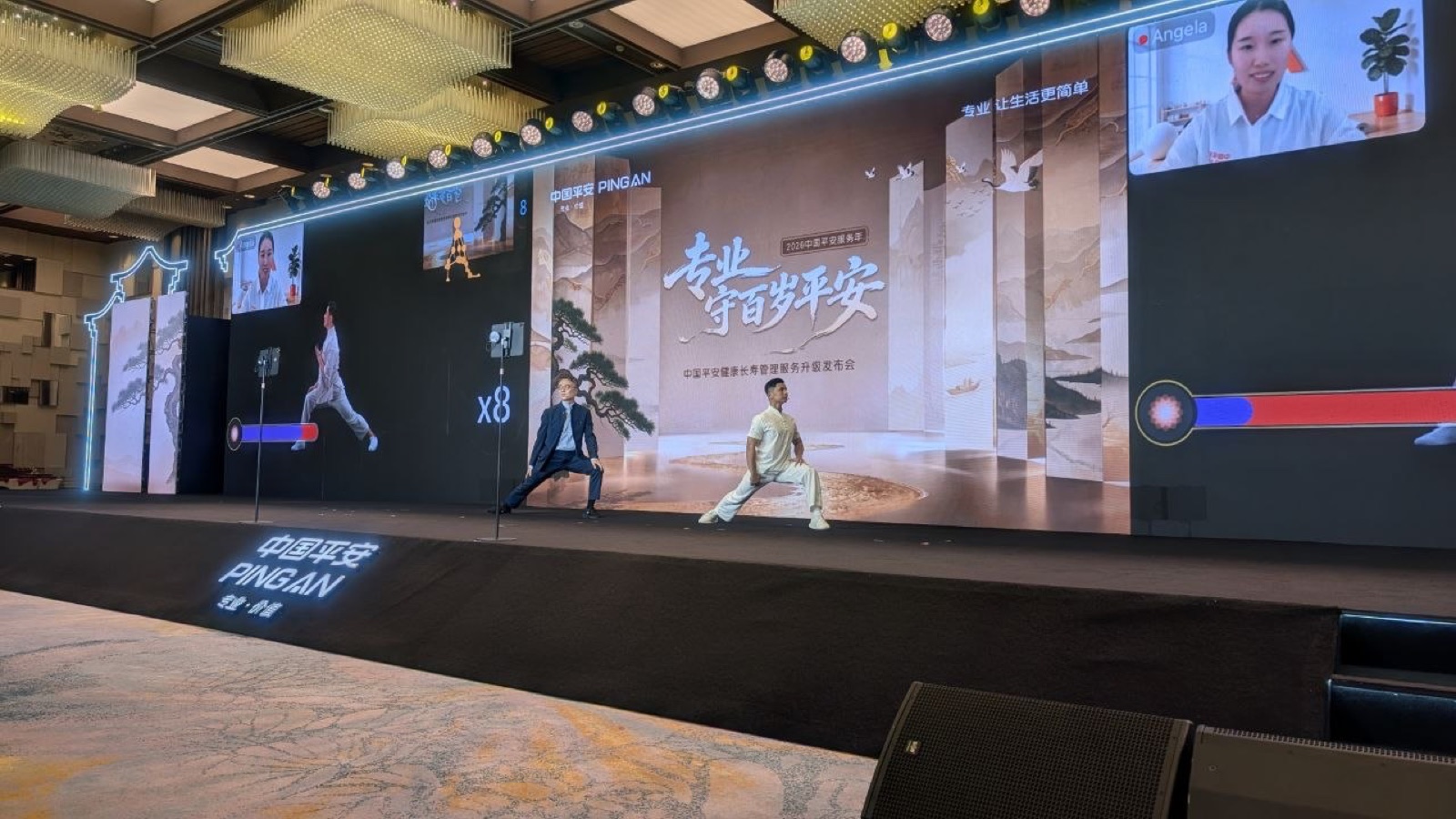
Ping An demonstrated an AI-plus-human personal coaching service that turns full-body motion tracking into real-time guidance.
The Ping An Smart Personal Coach uses the company’s DeepBody engine to capture skeletal key points, provide live feedback, and structure an assessment, training, and reinforcement loop. A human coach and an AI coach work together across phones, tablets, and television screens.
This is important because consumer longevity depends on more than discovering insights. It depends on delivering an intervention often enough, clearly enough, and cheaply enough for millions of people to use it.
International perspective
Diagnostics and early disease detection are the most actionable longevity interventions available today.
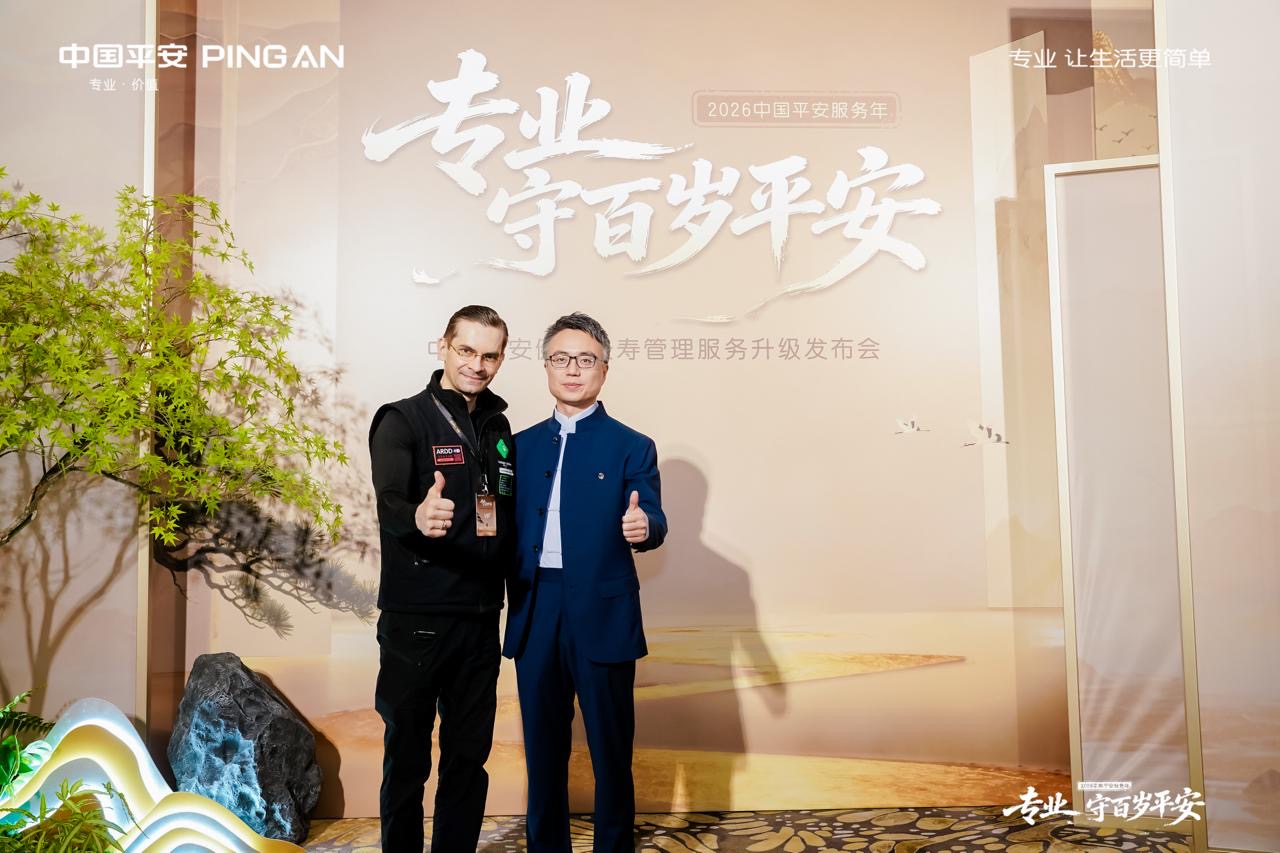
Alex Zhavoronkov joined the life-science panel as founder and co-CEO of Insilico Medicine and a long-standing researcher at the intersection of artificial intelligence, drug discovery, aging biomarkers, and longevity medicine.
In the 2026 AgingBio multi-model consensus experiment, six frontier language models ranked Zhavoronkov first among individuals in AI for longevity with 59 of 60 possible points. The same experiment ranked Insilico Medicine first among companies with 57 of 60 points. This is a model-consensus signal based on accumulated public evidence, not a scientific award.


Alex was joined at the launch by Dominika Wilczok, a rising figure in longevity biotechnology. A recent Duke University neuroscience graduate, Wilczok has just joined Qiming Venture Partners as Entrepreneur in Residence, focused on longevity biotechnology and longevity drug discovery. Her presence at the Ping An launch reflects the same thesis driving this initiative: the next phase of longevity science depends as much on capital, company-building, and go-to-market infrastructure as it does on the underlying biology.
The central message
Regular, comprehensive diagnostics can reveal cancer, cardiometabolic risk, neurodegenerative signals, and other disease processes at stages when intervention is more effective.
No drug has yet been shown in controlled human trials to add even one year of life to an already healthy, well-optimized, well-diagnosed person. Claims of such an effect should be treated as unproven until clinical evidence exists.
Drug programs must first demonstrate safety and efficacy in recognized diseases. Only then can researchers responsibly test broader effects on aging biology and related conditions.
Clinical trials can collect aging-clock, proteomic, metabolomic, and other biomarker data to test whether a disease therapy also shifts biological processes associated with aging.
Drug discovery strategy
Insilico Medicine is advancing a portfolio of more than 40 drug programs while using AI to search for targets that connect specific diseases with mechanisms implicated in aging.
The strategy begins with dual-purpose biology. A target may contribute to a defined disease and also participate in processes associated with aging. AI systems help identify those targets, generate candidate molecules, and prioritize programs for clinical development.
If a drug is approved for a disease, evidence collected during development may support studies in related diseases or, where scientifically and regulatorily justified, aging-related indications. Aging clocks do not prove life extension on their own. They are measurement tools that can add biological context to clinical outcomes.
“In phase two human clinical trials, we can collect biomarker, proteomic, metabolic, and other data, then ask whether the drug is also changing biological age.”
Alex Zhavoronkov, remarks at the Ping An launch
Why foundation models matter
Foundation models can integrate molecular, clinical, imaging, and longitudinal health data, then support many downstream tasks instead of solving only one narrow problem.
Multimodal models can search for weak patterns that precede conventional clinical thresholds.
Aging clocks estimate age-related state from omics, imaging, physiological, or clinical measurements.
Models can connect disease pathways with aging mechanisms and prioritize testable hypotheses.
Generative systems can propose molecules optimized against multiple potency, safety, and developability constraints.
Longitudinal biomarkers can reveal whether a treatment affects both disease endpoints and broader biology.
At scale, models can translate complex data into individualized next steps, with professional oversight.
Why leadership matters
The scientific tools of longevity become socially meaningful only when they reach ordinary people early, repeatedly, and at sustainable cost.
Most health systems are optimized for acute episodes. Longevity requires a different cadence: baseline measurement, repeated screening, risk stratification, behavior support, escalation, recovery, and long-term follow-up.
Ping An can connect insurance, managed care, digital health, clinical networks, home services, and enterprise programs. That combination makes the launch more than a set of centers. It creates infrastructure for continuous prevention.
The scale advantage
Screening and health management can be built into normal service relationships rather than offered only after a crisis.
Large, longitudinal service networks can generate the real-world evidence needed to evaluate and refine models responsibly.
A shared alliance can reduce fragmented delivery by defining traceable workflows and consistent quality requirements.
Digital, home, hospital, and enterprise channels allow the system to meet people where health decisions actually happen.
Detecting disease or functional decline sooner can preserve options and improve outcomes.
Connected data and coordinated pathways can reduce repeated tests, missed follow-up, and disconnected interventions.
Longitudinal measurement can help separate promising signals from unsupported longevity claims.
Responsible optimism
AI can improve detection, coordination, personalization, and drug discovery. It cannot substitute for clinical validation.
A trustworthy consumer longevity system must separate three categories: interventions already supported by clinical evidence, risk-reduction practices supported by population data, and experimental approaches that still require trials.
Ping An’s decision to lead with diagnostics, professional service, quality control, and measurable pathways is important because it places advanced technology inside a structure of care rather than presenting technology as a cure by itself.
The accompanying white paper
Released alongside the launch, the 2026 High-Quality Healthy Longevity White Paper is the scientific backbone behind the service architecture: it proposes the first systematic framework for measuring and managing healthspan, not just lifespan.
百岁健康标准——从被动医疗到健康优化范式 (“The Centenarian Health Standard: From Passive Medicine to a Health Optimization Paradigm”) was jointly published by the Asia-Pacific Longevity Medicine Society (APLMS), Ping An Health, and the China Anti-Aging Promotion Association, with input from an international review committee that included Leroy Hood, Nathan LeBrasseur, and Andrea Maier. Its central argument: China's life expectancy has reached roughly 79 years, but the lifespan-healthspan gap keeps widening, meaning a growing share of those extra years are lived with chronic disease rather than in good health.
The white paper's core proposal is the China Healthy Longevity Index (CHLI), a quantifiable, assessable, and intervenable scoring system spanning six dimensions of health, with a composite scoring formula and risk-stratification model intended to move health management from reactive treatment toward continuous, full-life-cycle optimization. It is the analytical counterpart to the service infrastructure Ping An unveiled on stage: the centers, the AI triage, and the four-channel delivery model all exist to act on exactly the kind of signal the CHLI is designed to surface.
National attention
The supplied monitoring file tracks 317 items published across web news, mobile news, forums, short video, Weibo, and WeChat.
The list includes original reporting, wire distribution, mobile editions, reposts, and syndication. Counts measure tracked items, not 317 independent newsrooms or unique original articles. The explorer below surfaces a verified, publicly linkable sample of that coverage.
| # | Type | Title | Outlet | Published |
|---|---|---|---|---|
| Loading coverage index... | ||||
Selected original reporting
On the ground
Professional event photography, stage materials, live demonstrations, and candid moments from July 28, 2026.
The gallery includes the official center unveiling, Alex Zhavoronkov’s participation, expert panels, the AI movement demonstration, and the broader event community.